I am a licensed naturopathic doctor (ND) and an Institute for Functional Medicine Certified Practitioner (IFMCP), and gut function is one of the biological drivers I return to with nearly every patient I see. This is the routine I actually live, built around daily habits that determine whether digestion works for you or against you.
Our bodies are all individual, but gut health and digestion are crucial for optimal health in us all. Read on to learn how I care for my own digestion every day. While some of these habits may help support your digestion, the best way to formulate a plan that supports your gut health is to work with a qualified healthcare provider who can tailor a routine to your body’s specific needs.
Key Takeaways
- Gut health is shaped by more than food and supplements. Hydration, oral hygiene, circadian rhythms, stress, meal timing, and eating habits can all influence digestion and the gut microbiome.
- I start my day with tongue scraping, hydration, natural light, and a short pause before breakfast to support oral health, circadian rhythms, and digestion.
- Nutrition is a priority for good gut health. I emphasize protein, fiber-rich vegetables, colorful plant foods, and fermented foods, while leaving several hours between meals to support digestive function and microbial diversity.
- Mindful eating is a central part of my routine. Sitting down, slowing the pace of meals, and chewing thoroughly may help support the body’s natural digestive processes.
- Supplements—including modified citrus pectin, digestive enzymes, and a spore-based probiotic—complement my foundational habits, but individual needs vary and supplements should be chosen based on personal health needs.
6:00 a.m.: Tongue Scraping
The first thing I do every morning, before water or anything else, is scrape my tongue with a copper tongue scraper and brush my teeth with a fluoride-free toothpaste.
Overnight, saliva flow drops, and bacteria, dead cells, and food debris accumulate on the tongue as a visible coating—the main source of morning breath, and a meaningful bacterial load at the entrance to the digestive tract. A clinical trial found tongue scraping removed significantly more of that coating and the volatile sulfur compounds behind bad breath than brushing the tongue with a toothbrush.1
Copper has well-documented antimicrobial properties. Copper ions disrupt bacterial cell membranes on contact, which is why it's been studied for decades as a self-sanitizing material in clinical settings.2
Brushing my teeth matters too—periodontal inflammation has been linked to systemic inflammation.3 And there's growing interest in the oral-gut axis, since swallowed oral bacteria help seed the gut microbiome downstream. I choose fluoride-free toothpaste as a personal preference to limit overall fluoride exposure, not out of a safety concern about fluoride toothpaste itself.
Room-Temperature Spring Water With Modified Citrus Pectin
After seven to eight hours without fluid, you wake up mildly dehydrated. A full glass of water rehydrates the body and helps get peristalsis, the wave-like muscle contractions that move food through the digestive tract, moving again.
I enjoy water at room temperature rather than cold—a controlled study found colder liquids measurably slowed gastric emptying compared to warmer ones, consistent with a long-standing principle in traditional medicine that cold beverages work against digestion.4 I use spring water for its mineral content, though filtered water works too.
I also stir in one scoop of modified citrus pectin (MCP), which I use for both prebiotic and gentle detox support. As a fermentable fiber, MCP helps feed beneficial gut bacteria. And MCP's smaller molecular structure may allow it to bind toxic elements in the gut for elimination—an older clinical study found MCP supplementation increased urinary excretion of arsenic and cadmium.5 Taking MCP first thing is the easiest way to make sure it happens daily.
Natural Light Exposure
After enjoying a glass of water, I expose my eyes to natural light before turning on any overhead light. Light entering the retina is the primary cue your brain uses to set the circadian clock, and morning light triggers the cortisol awakening response—a healthy cortisol rise signaling to every system, including the gut, that the day has begun.
A small, classic study found transitioning from dim to bright light produced an immediate, measurable cortisol spike.6 This matters for the gut because circadian misalignment has been shown to alter gut microbiome composition directly.7
Compare this to what most people do: reach for their phone within minutes of waking, activating the brain's dopamine reward pathway before the body has woken on its own terms. While research on morning screen use and gut health is limited, a randomized trial limiting screen time found measurable improvements in self-reported well-being and mood compared with usual habits.8
Then comes coffee, often on an empty stomach. Coffee can acutely increase cortisol levels in some people, particularly when consumed regularly or in larger amounts.9 I prefer to drink mine later in the morning, after I’ve had water, natural light, and breakfast, rather than relying on coffee as the first signal to start my day.
Pause Before Eating
I wait about 30 minutes after drinking water before eating. Digestion relies on adequate stomach acid to activate the enzyme pepsin and create an environment hostile to swallowed bacteria. A large volume of fluid right before a meal can transiently dilute that acid. I prefer to hydrate first, then give my stomach a short window to return to resting acidity to help me digest more efficiently.
Breakfast: Protein, Fiber, and Color
Breakfast is three whole eggs plus two egg whites, a different vegetable combination daily, and a side of blueberries.
Protein is an important part of my breakfast because it helps make the meal satisfying and can also influence the post-meal blood sugar response. A 2024 meta-analysis found that adding protein to carbohydrate-containing meals generally reduced postprandial glucose responses in adults without diabetes, although the effect varied by protein source and health status.10
I pair protein with a rotating variety of vegetables to provide fiber and an assortment of nutrients and plant compounds that support overall and gut health. Data from the American Gut Project found people eating 30 or more plant types weekly had significantly more diverse gut microbiomes than those eating fewer than 10.11 Blueberries add fiber and polyphenols.
I personally keep breakfast free of gluten and dairy because this approach works well for me. However, these foods do not need to be eliminated for good gut health unless there is an individual intolerance, allergy, or medical indication.
I also limit ultra-processed foods and focus primarily on whole and minimally processed foods. Some research suggests an emulsifier known as carboxymethylcellulose, commonly used in ultra-processed foods, may alter gut microbiota composition in ways linked to inflammation.12
Mindful Eating
I eat breakfast without my phone, sitting down, chewing slowly. Digestion begins before food reaches the stomach—the sight, smell, and act of chewing trigger the cephalic phase digestive response, an anticipatory release of saliva, acid, and enzymes that primes the gut. A review of studies found mindful eating helped moderate food intake by slowing eating rate.13
Compare this to how most people eat—in the car, scrolling, rushing out the door. Multitasking while eating, especially something as demanding as driving, keeps the nervous system tilted toward a sympathetic "fight or flight" state rather than the parasympathetic "rest and digest" state digestion requires. Under sympathetic activation, stomach acid, enzyme secretion, and motility are all measurably suppressed.
Ten unhurried minutes sitting down to eat does more for digestion than almost any supplement I could hand someone.
Digestive Enzymes
For supplementation at breakfast, I take a broad-spectrum blend of protein-, fat-, and carbohydrate-digesting enzymes with the first bites of food. A randomized, double-blind, placebo-controlled study in patients with functional dyspepsia found a multienzyme complex significantly improved digestive symptoms compared to placebo.14 Rather than asking my stomach to do all the enzymatic work alone, I like giving it reinforcement, especially on mornings when I'm digesting a protein-heavy breakfast.
12:00 p.m.: A Complete Lunch
Lunch is protein, fiber-rich vegetables, and a small fermented side—usually sauerkraut or kimchi. A controlled study on fermented foods found a diet higher in them increased microbiome diversity and lowered inflammation markers over ten weeks.15
Afternoon: Enzymes and Meal Spacing
About 15 minutes before dinner, I take another dose of digestive enzymes. I also avoid snacking between lunch and dinner. Between meals, the gut relies on the migrating motor complex—a wave of contractions that sweeps residual food and bacteria through the digestive tract—which is disrupted by constant grazing and supported by real spacing between meals.16
6:00-6:30 p.m.: An Early, Complete Dinner
I build my dinner around protein and vegetables with a modest portion of complex carbohydrates, aiming to finish eating by 6:30 p.m. Research on the circadian rhythm suggests gut microbiota composition may shift with feeding-and-fasting timing.7 Finishing early gives the gut several uninterrupted hours to digest and reset before sleep.
Evening: Repair and Rest
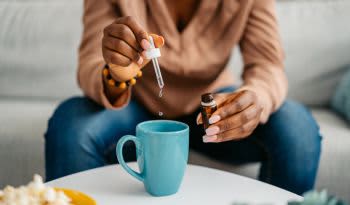
Before bed, I take a spore-based probiotic and finish with peppermint or ginger tea.
Spore-forming strains, like Bacillus subtilis, are naturally resistant to stomach acid and survive transit through the GI tract better than many conventional probiotic strains, reaching the intestines intact. A study on Bacillus subtilis DE111 suggests it may support healthy gut microbiome composition and immune markers in adults.17 I take mine at night, after my last meal, so it has the full overnight window to do its work while the gut is otherwise at rest.
I close my day with a few minutes of quiet reflection—the bookend to the morning's light and breath.
The Bottom Line
I keep my gut health routine intentionally simple. While supplements like modified citrus pectin, digestive enzymes, and a spore-based probiotic are part of my routine, supporting digestion goes far beyond supplements. Oral hygiene, natural light, a varied whole-food diet, mindful eating, meal spacing, and adequate rest all play a role in supporting a healthy digestive system.
The most effective gut health routine is one you can practice consistently—and one that fits your individual needs. Rather than trying to adopt every habit at once, start with the foundations and work with a qualified healthcare practitioner if you have persistent digestive symptoms or need help determining which foods or supplements are appropriate for you.
This article is for educational purposes only and should not be treated as medical advice. Please speak with your doctor before making any changes to your supplement or medication routine.
References:
- Pedrazzi V, Sato S, de Mattos M da GC, Lara EHG, Panzeri H. Tongue-cleaning methods: a comparative clinical trial employing a toothbrush and a tongue scraper. J Periodontol. 2004;75(7):1009-1012. doi:10.1902/JOP.2004.75.7.1009
- Grass G, Rensing C, Solioz M. Metallic copper as an antimicrobial surface. Appl Environ Microbiol. 2011;77(5):1541-1547. doi:10.1128/AEM.02766-10
- Hajishengallis G, Chavakis T. Local and systemic mechanisms linking periodontal disease and inflammatory comorbidities. Nat Rev Immunol. 2021;21(7):426-440. doi:10.1038/S41577-020-00488-6
- Fujihira K, Hamada Y, Yanaoka T, Yamamoto R, Suzuki K, Miyashita M. The effects of water temperature on gastric motility and energy intake in healthy young men. Eur J Nutr. 2020;59(1):103-109. doi:10.1007/S00394-018-1888-6
- Eliaz I, Hotchkiss AT, Fishman ML, Rode D. The effect of modified citrus pectin on urinary excretion of toxic elements. Phytother Res. 2006;20(10):859-864. doi:10.1002/PTR.1953
- Leproult R, Colecchia EF, L’Hermite-Balériaux M, Van Cauter E. Transition from dim to bright light in the morning induces an immediate elevation of cortisol levels. J Clin Endocrinol Metab. 2001;86(1):151-157. doi:10.1210/JCEM.86.1.7102
- Lotti S, Dinu M, Colombini B, Amedei A, Sofi F. Circadian rhythms, gut microbiota, and diet: Possible implications for health. Nutrition, Metabolism and Cardiovascular Diseases. 2023;33(8):1490-1500. doi:10.1016/j.numecd.2023.05.009
- Pedersen J, Rasmussen MGB, Sørensen SO, et al. Effects of limiting digital screen use on well-being, mood, and biomarkers of stress in adults. Npj mental health research. 2022;1(1). doi:10.1038/S44184-022-00015-6
- Sabt A, Alyafei F, Alaaraj N, Hamed N, Ahmed S, Soliman A. Cortisol response to coffee, tea, and caffeinated drinks: A comparative review of studies. Endocrine Abstracts. 2025;110. doi:10.1530/ENDOABS.110.P151
- Wolever TM, Zurbau A, Koecher K, Au-Yeung F. The Effect of Adding Protein to a Carbohydrate Meal on Postprandial Glucose and Insulin Responses: A Systematic Review and Meta-Analysis of Acute Controlled Feeding Trials. Journal of Nutrition. 2024;154(9):2640-2654. doi:10.1016/j.tjnut.2024.07.011
- McDonald D, Hyde E, Debelius JW, et al. American Gut: an Open Platform for Citizen Science Microbiome Research. mSystems. 2018;3(3):e00031-18. doi:10.1128/MSYSTEMS.00031-18
- Chassaing B, Compher C, Bonhomme B, et al. Randomized Controlled-Feeding Study of Dietary Emulsifier Carboxymethylcellulose Reveals Detrimental Impacts on the Gut Microbiota and Metabolome. Gastroenterology. 2022;162(3):743-756. doi:10.1053/j.gastro.2021.11.006
- Seguias L, Ferriday D, Hinton EC, McCaw T, Tapper K. Mindful eating and food intake: Effects and mechanisms of action. J Exp Psychol Appl. 2025;31(3). doi:10.1037/XAP0000530
- Majeed M, Majeed S, Nagabhushanam K, et al. Evaluation of the Safety and Efficacy of a Multienzyme Complex in Patients with Functional Dyspepsia: A Randomized, Double-Blind, Placebo-Controlled Study. J Med Food. 2018;21(11):1120. doi:10.1089/JMF.2017.4172
- Wastyk HC, Fragiadakis GK, Perelman D, et al. Gut-microbiota-targeted diets modulate human immune status. Cell. 2021;184(16):4137-4153.e14. doi:10.1016/j.cell.2021.06.019
- Deloose E, Janssen P, Depoortere I, Tack J. The migrating motor complex: control mechanisms and its role in health and disease. Nat Rev Gastroenterol Hepatol. 2012;9(5):271-285. doi:10.1038/NRGASTRO.2012.57
- Freedman KE, Hill JL, Wei Y, et al. Examining the Gastrointestinal and Immunomodulatory Effects of the Novel Probiotic Bacillus subtilis DE111. Int J Mol Sci. 2021;22(5):2453. doi:10.3390/IJMS22052453
DISCLAIMER:
These statements have not been approved by the Food and Drug Administration. These products are not intended to diagnose, treat, cure or prevent disease.



























































 Table of Contents